Egypt Startup Charter: Ongoing Policies and Procedures to Enhance Egypt’s Startup Business Environment
08 February 2026
Egypt Startup Charter: Ongoing Policies and Procedures to Enhance Egypt’s Startup Business Environment
Adoption of a unified definition for startups with environmental or social impact to enable access to dedicated incentives
Facilitation of importing electronic components and advanced equipment for startups operating in the electronics sector
Provision of incentives and technical support for industrial startups to enable scaling
Establishment of regional alliances among universities, research centers, startups, and investors
Promotion of innovation through national alliances in priority technology sectors, including artificial intelligence and deep technologies
Enabling startups to access European innovation financing through the Horizon Europe program
Encouraging government entities to collaborate with Egyptian startups to deliver innovative digital solutions
Provision of financial and procedural incentives for incubators and accelerators, and establishment of specialized service free zones
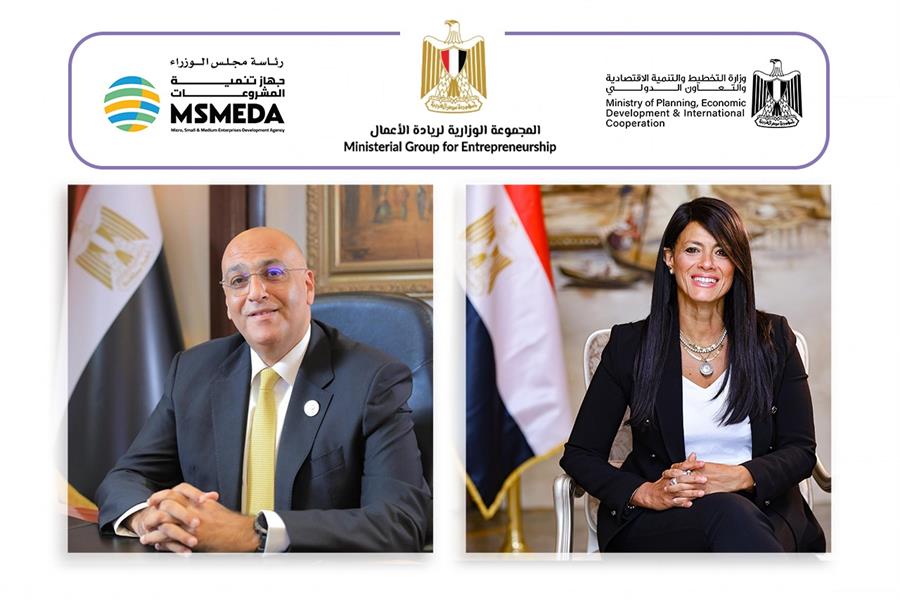
H.E. Dr. Rania Al-Mashat, Minister of Planning, Economic
Development and International Cooperation, affirmed that the Egypt Startup
Charter includes more than 80 policies and procedures currently being
implemented to bridge procedural gaps and enable startups to benefit from
government incentives. These measures include actions already implemented to
introduce innovative financing mechanisms such as crowdfunding, as well as
short- and medium-term measures aimed at improving the startup business
environment. These include facilitating tax procedures, simplifying liquidation
and exit processes, and conducting a comprehensive study to identify regulatory
and procedural challenges facing priority subsectors, while proposing
practical, sector-specific solutions aligned with the nature of their
activities.
The policies outlined in the action plan reflect a
participatory, evidence-based process aimed at aligning recommendations with
the needs of Egypt’s entrepreneurship ecosystem. This process began with a
comprehensive review of more than 500 recommendations contained in over 25
reports prepared by local, regional, and international entities. These
recommendations were referred to the working groups established under the
Ministerial Group for Entrepreneurship, where they were reviewed and
prioritized based on relevance, feasibility, and anticipated impact.
The implementation of these measures will take place under
the umbrella of the Ministerial Group for Entrepreneurship, through the
relevant ministries and entities, including the Ministries of Finance;
Investment and Foreign Trade; Labor; Social Solidarity; the Micro, Small and
Medium Enterprise Development Agency; the Ministry of Communications and
Information Technology; and other concerned bodies.
The government aims to implement a series of measures to
establish a tax system that reflects the nature of startups, including the
designation of specialized tax units to handle startup cases, taking into
account their business models and cash flow structures. This approach is
intended to reduce complexity, ensure tax clarity, and avoid unpredictable
assessments.
Digital Government Engagement for Classified Startups
The Charter also supports full digital interaction between
classified startups and government entities, including tax authorities, labor
offices, and social insurance bodies, through trained points of contact. This
will accelerate service delivery and improve communication, in addition to
establishing a unified digital system that enables entrepreneurs to complete
all company registration procedures efficiently through a single online window,
without administrative complexity or multiple authorities.
The policies further include a growth-supportive tax regime
for companies with annual revenues below EGP 20 million, through reduced income
tax rates, exemptions from capital gains tax, stamp duty, real estate
registration and notarization fees, and the deferral of the first tax audit for
five years, easing burdens during establishment and expansion phases.
The government is also studying sector-specific
facilitations to address regulatory and procedural challenges in priority
subsectors. Future measures aim to simplify licensing procedures for startups,
adopt a unified definition for startups with environmental or social impact to
enable access to targeted incentives, amend the Law on Incentives for Science,
Technology, and Innovation, and assess the fiscal impact of expanding the
simplified tax regime.
An Innovation-Enabling Business Environment
The Ministerial Group for Entrepreneurship also targets the
implementation of measures to facilitate the import of equipment, electronic
components, advanced technological devices, and embedded electronic systems for
startups operating in the electronics sector, including the preparation of a
“white list” to reduce time and administrative burden.
Additional measures include providing lower-cost, faster
industrial services by granting industrial startups access to a package of
technical, operational, and marketing services, including shared equipment and
operational support to enable scaling. This is complemented by financial and
technical support through the “Alliance and Development” initiative, which aims
to establish regional alliances comprising universities, research centers,
startups, support organizations, investors, and government entities. The
Charter also enables Egyptian startups to access European funding through the
Horizon Europe research and innovation program.
Government as an Enabling Partner
In this context, the government seeks to reinforce its role
as an enabling partner—rather than a competitor—to startups by encouraging
government entities to collaborate with Egyptian startups to deliver innovative
and effective digital solutions within the framework of Egypt’s Digital
Strategy. This includes enabling fintech startups to participate in the
development of digital services and facilitating startup access to government
procurement and tenders.
Talent Development and Retention
Through the Egypt Startup Charter, the government is
increasing investments in human capital and talent retention while opening
international pathways. Measures include providing financial support for
technical training for startup employees to enhance workforce efficiency
without imposing additional financial burdens, facilitating the entry of
foreign professionals through visa systems available to citizens of more than
180 countries to support investment attraction and expansion.
Additional measures include simplifying applications for
exemptions from foreign labor quotas through a specialized committee at the
Ministry of Labor with clear directives to accelerate approvals, launching an
executive education program tailored for senior management teams in startups—funded
under the scale-up support program—and launching a Soft Landing Program to
enable startups to expand to and from Egypt while attracting global companies.
The Charter also encourages large corporations to integrate
startups into their supply chains, promotes entrepreneurship culture across
different stages of education, and supports participation in international
exhibitions to showcase Egyptian startup products and innovations.
Infrastructure that Drives Growth and Expansion
Within the same framework, the policies include providing financial and procedural incentives for incubators and accelerators, establishing specialized service free zones targeting sectors such as technology, media, and financial services to offer advanced infrastructure and support startups, leveraging recently approved crowdfunding mechanisms, and allocating a dedicated line within the state investment plan for entrepreneurs to efficiently direct public investment toward supporting startups and improving resource allocation.
The effectiveness of launching the Start-up Charter at the Grand Egyptian Museum
-

-

-

-
 copied successfully