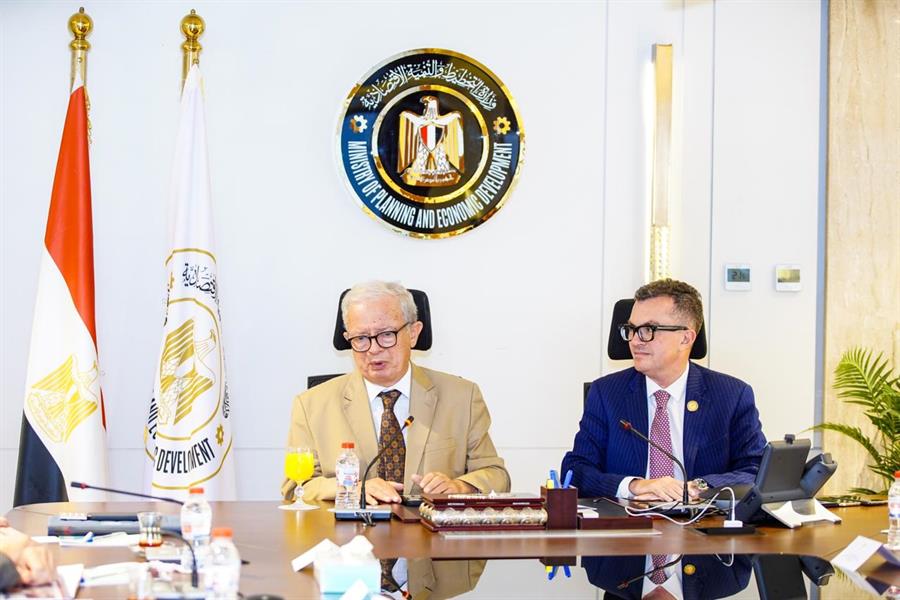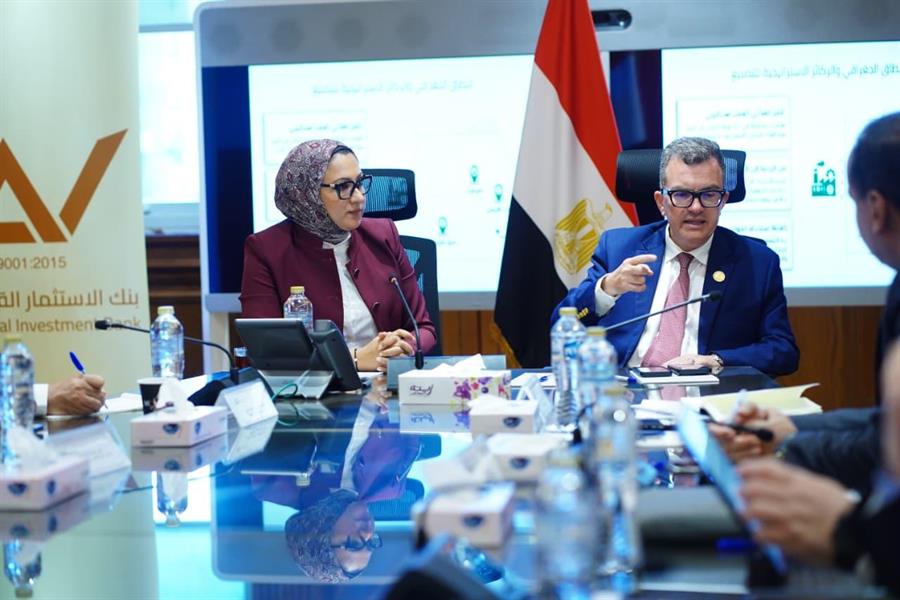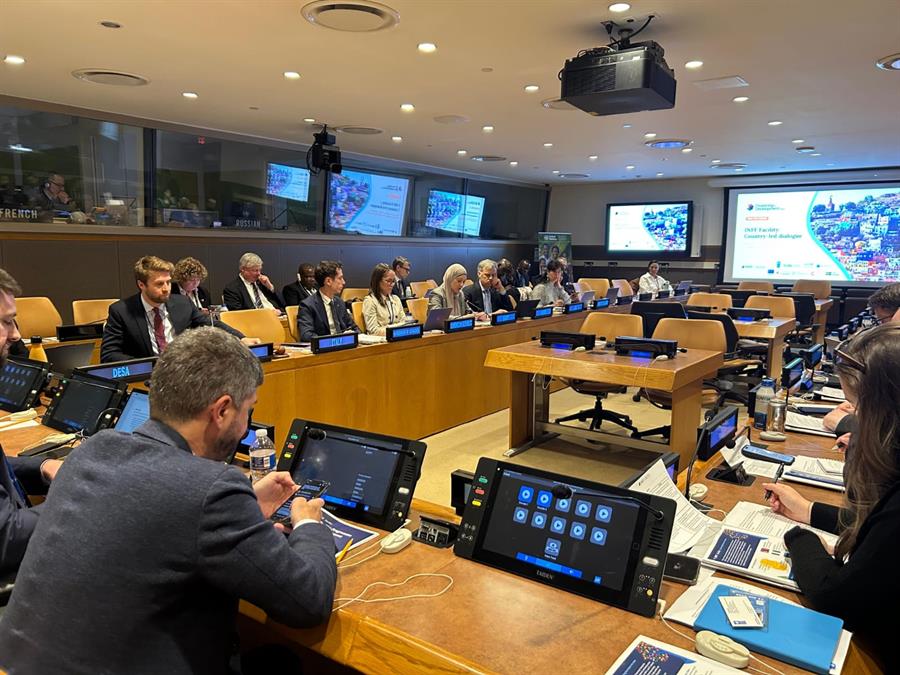
Full Interview of H.E. Dr. Rania Al-Mashat, Minister of Planning, Economic Development and International Cooperation, with Bloomberg International during the 2026 World Economic Forum in Davos
23 January 2026
Al-Mashat: President Abdel Fattah El-Sisi’s messages were clear on the need to entrench peace and security in the region, with Egypt’s water security as a top priority
Egypt operates in a highly volatile regional environment, yet the economy has achieved growth and demonstrated resilience due to comprehensive reforms
The reform path continues across all sectors, enhancing credibility with the business community and creating an attractive investment climate
Through Egypt’s Narrative for Comprehensive Development: Reforms for Growth, Jobs & Resilience, we are maximizing returns on infrastructure investment to transition toward high-value production, exports, and investment
Reform is an ongoing process amid accelerating regional and global transformations
Human development—particularly education and health—alongside sustaining growth and job creation, remains a top priority
Economic reforms have created fiscal space to enhance social spending, a trajectory we are committed to maintaining
Public debt management in Egypt is diversified and innovative, including debt-for-development swaps with Germany and Italy, with further programs under preparation with China
Budget support from international partners extends debt maturities, reduces financing costs, and supports diversification of funding sources
Al-Mashat highlights three key messages from Davos discussions: geopolitical risks affect all countries, the global economy has shown resilience despite protectionist policies, and the widening digital divide between countries poses a serious risk
Bloomberg International conducted an interview with H.E. Dr.
Rania Al-Mashat, Minister of Planning, Economic Development and International
Cooperation, during the 2026 World Economic Forum in Davos. The discussion
addressed Egypt’s participation in the Forum—led by President Abdel Fattah
El-Sisi—as well as the outlook of the Egyptian economy and its resilience amid
surrounding regional tensions.
H.E. Dr. Al-Mashat spoke about President El-Sisi’s address
during the Forum’s plenary session and his bilateral meeting with President
Donald Trump, noting that the President focused on two main pillars. The first
concerned the second phase of the peace process. Egypt previously hosted the
Sharm El-Sheikh Peace Conference and has played a pivotal mediation role over the
past two years, including efforts related to ceasefires, hostage releases, and
the recovery of remains. This phase, she emphasized, is critically important,
as the region stands at a decisive crossroads. The discussions between the two
leaders reaffirmed the commitment to move forward and underscored the
importance of collective action to ensure full implementation of all elements
of the plan.
The second pillar centered on Egypt’s water security. For
more than a decade, Egypt has been engaged in negotiations with Ethiopia
regarding water allocations and the implications of the Grand Ethiopian
Renaissance Dam on its water security. During President Trump’s first term,
negotiations came close to reaching an agreement, making renewed U.S.
engagement particularly significant in this sensitive file.
Regarding the Peace Council and its role in fostering
long-term stability, H.E. Dr. Al-Mashat stressed that current developments
reflect growing recognition that peace and security serve the interests of all.
Discussions in Davos focus on economic growth and prosperity—objectives that
cannot be achieved without a stable and secure regional environment.
She highlighted that Egypt operates within a highly volatile
regional context, bordering Gaza, Sudan, and Libya. Despite these challenges,
the Egyptian economy recorded a 5% growth rate, while tourism revenues reached
record highs—demonstrating strong economic resilience achieved through a
comprehensive and well-sequenced reform package.
She added that Egypt launched macroeconomic reforms—both
fiscal and monetary—in March 2024. Since then, reforms have expanded to include
industry, the business environment, and the green transition. This integrated
reform agenda has enhanced Egypt’s credibility with investors and fostered a
more attractive climate for private investment, whether from domestic
investors, local companies, or foreign firms. Within the framework of Egypt’s
Narrative for Comprehensive Development: Reforms for Growth, Jobs &
Resilience, Egypt is now working to maximize the returns on extensive
infrastructure investments made over the past decade, paving the way for a
second phase of reform focused on higher value-added production, productivity
gains, and trade expansion.
On future reforms, H.E. Dr. Al-Mashat emphasized that reform
is a continuous process. Amid rapid global and regional shifts, countries must
remain flexible to strengthen resilience and achieve sustainable growth. Growth
and job creation remain core priorities, alongside continued investment in
human capital—particularly in health and education. The fiscal space created by
reforms, combined with mechanisms to address financing gaps, will be fully
directed toward strengthening social spending, a course Egypt is committed to
sustaining.
Turning to debt-swap initiatives, she explained that Egypt’s
public debt management approach is characterized by diversity and innovation.
Egypt has secured direct budget support from international financial
institutions, extending debt maturities and reducing overall financing costs,
thereby enhancing fiscal sustainability. Additionally, Egypt employs two
debt-swap models: debt-for-investment and debt-for-development. Over recent
years, Egypt concluded debt-swap agreements with Germany and Italy and is
currently preparing a new agreement with China. Debt swaps with Germany are
linked to green transition objectives, aligning with Egypt’s target to reach 42%
renewable energy by 2030. Foreign investment in renewable energy—including
wind, solar, hydrogen, and battery storage—is expected to reach approximately
USD 6 billion in the coming years.
Responding to questions on financing diversification, H.E.
Dr. Al-Mashat explained that a cornerstone of macroeconomic stability is
establishing a clear ceiling on public investment supported by a robust
governance framework to crowd in private sector investment. Egypt’s current
borrowing priorities focus on financing strategic commodities and covering
budget financing gaps. Budget support therefore remains a key priority in
engagements with multilateral development banks and international partners, as
it lowers financing costs compared to international capital markets. Egypt also
benefits from guarantees provided by international financial institutions for
bond issuances, such as previously issued Panda bonds.
She underscored the accuracy and credibility of Egypt’s
growth data, noting Egypt’s IMF membership, periodic reviews, and adherence to
internationally recognized statistical methodologies, including those related
to the Sustainable Development Goals. She clarified that discussions around
data are not about quality or reliability, but rather the integration of segments
of the informal economy into national accounts.
She concluded that the size of the informal sector reflects
the breadth of the economy rather than deficiencies in data quality. Egypt has
enacted a new law for micro, small, and medium-sized enterprises to incentivize
informal businesses to formalize through comprehensive regulatory and financial
incentives, with tangible results already emerging.
In closing, H.E. Dr. Al-Mashat highlighted three central
themes from Davos discussions: first, geopolitical risks and pervasive
uncertainty affect all countries; second, the global economy has demonstrated
greater resilience than expected despite rising protectionism; and
third—perhaps the most serious risk—the widening inequality gap driven by
artificial intelligence, particularly between countries.
She noted extensive discussions on the divide between
countries that merely use AI technologies and those that actively develop them
through research, development, and programming. This shift could redefine
economic convergence globally, underscoring the need for genuine collective
action and a strong commitment to inclusivity in addressing AI-related
challenges.
-

-

-

-
 copied successfully