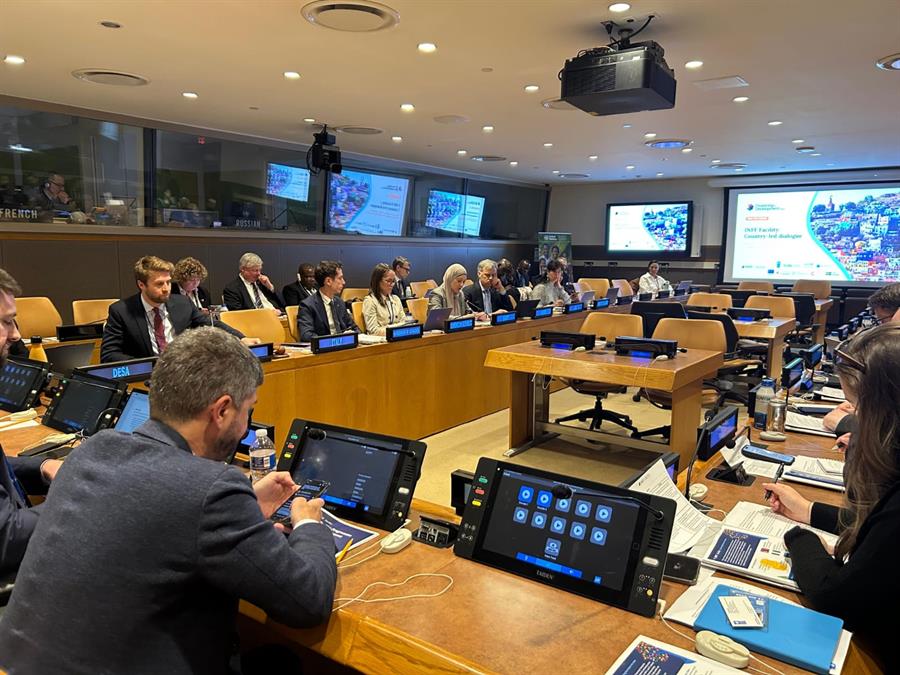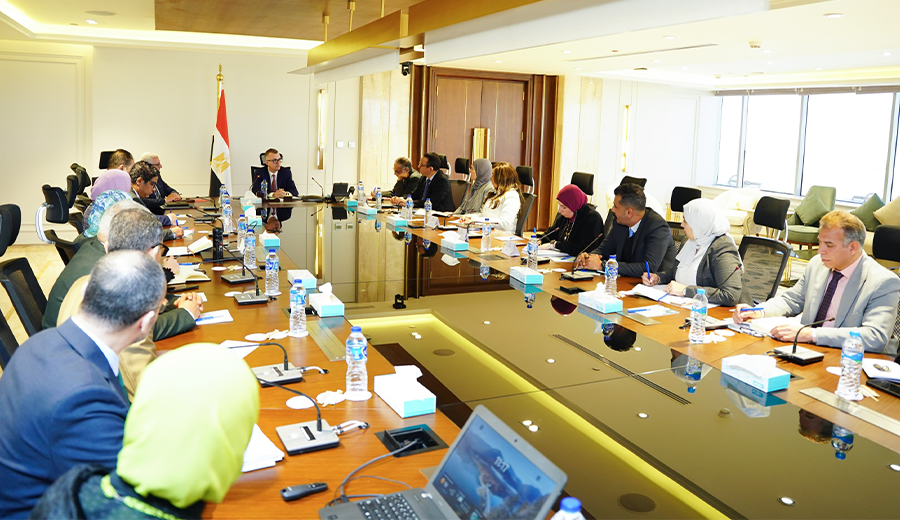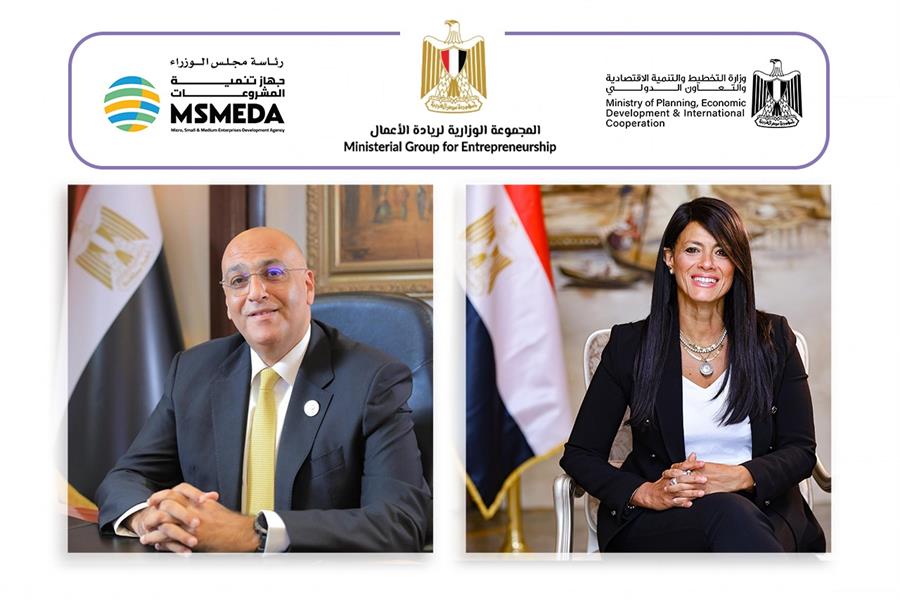
Dr. Rania Al-Mashat, Minister of Planning, Economic Development and International Cooperation, during her participation in a panel discussion on “The Future of Emerging Markets” at the World Economic Forum in Davos:
22 January 2026
The resilience of emerging markets is achieved through the uninterrupted implementation of reforms.
Egypt has presented a model of resilience in dealing with crises through fundamental reforms since March 2024.
We have benefited from long-term and innovative capital available from international institutions.
Investments by international institutions do not only enhance growth, but also pave the way for industrialization and stronger economic competitiveness.
Ongoing global transformations raise concerns about the technological and digital gap between developed and developing countries.
H.E. Dr. Rania Al-Mashat, Minister of Planning, Economic
Development and International Cooperation, participated in a panel discussion
entitled “The Future of Emerging Markets” during the World Economic Forum in
Davos, alongside Mr. Makhtar Diop, Managing Director of the International
Finance Corporation (IFC), and Mr. Bob Sternfels, Global Managing Partner of
McKinsey & Company.
During her participation, H.E. Dr. Al-Mashat emphasized that
building resilience in emerging economies is not achieved merely by relying on
growth indicators or foreign direct investment figures, but rather through the
continuous and uninterrupted implementation of reforms.
H.E. Dr. Al-Mashat pointed out that Egypt’s experience
represents a clear model in this regard, as March 2024 witnessed the
implementation of a package of fundamental reforms encompassing monetary and
fiscal policies, in addition to ongoing structural reforms. Despite regional
geopolitical challenges and the impact on Suez Canal revenues, the Egyptian
economy achieved a growth rate of 4.4% in the previous fiscal year, driven by
real productive sectors, most notably manufacturing, information and
communications technology, and tourism.
H.E. Dr. Al-Mashat reaffirmed that the current positive
returns are a direct result of structural reforms that have opened up the
economy and unleashed its latent potential, stressing that reform is a
continuous process with no ceiling. It is essential for reforms to continue in
a rapidly changing world, while ensuring that they encompass various economic
and social dimensions, as well as reforms related to the private sector.
The Minister also mentioned the issue of external capital
flows, noting the necessary distinction between short-term, volatile capital
and long-term capital that supports real development. She reiterated that
managing these flows requires a clear vision and strong institutional
readiness, praising the role played by the International Finance Corporation
(IFC) in supporting emerging economies.
H.E. Dr. Al-Mashat underscored that Egypt benefits
significantly from innovative financing instruments in infrastructure and
energy, where renewable energy plans are based on partnerships with the private
sector, supported by concessional financing, guarantees from the Multilateral
Investment Guarantee Agency (MIGA), and blended finance mechanisms that include
grants from development partners. She noted that this financing model has
contributed to the implementation of major projects in renewable energy, wind
power, and green hydrogen, in addition to climate adaptation projects in the
water and waste management sectors.
H.E. Dr. Al-Mashat pointed out that this type of “patient
capital” directed toward the private sector not only supports growth, but also
creates jobs and paves the way for strengthening industrialization and
increasing export-oriented activities. She stressed that Egypt’s investments in
ports and logistics infrastructure, within the framework of the African
Continental Free Trade Agreement, lie at the heart of supporting emerging
economies and connecting them to regional markets.
The Minister further discussed the future challenges related
to the technological revolution and artificial intelligence, expressing concern
about the risk of widening gaps between countries amid ongoing transformations.
H.E. Dr. Al-Mashat explained that the world is no longer
divided into countries that merely use technology and those that produce it;
rather, disparities are now linked to the ability to play an effective role
within the artificial intelligence ecosystem itself. She referred to a clear
lack of international discussions on how to achieve convergence among countries
in this field, stressing the need to integrate the AI dimension into the
programs of international financial institutions, including economic analysis
and diagnostic tools.
H.E. Dr. Al-Mashat considered that classifying economies
based on their possession of artificial intelligence capabilities will be a
decisive factor in attracting investments, which poses a major challenge for
developing countries, despite Africa’s wealth of strategic resources and rare
minerals.
In concluding her remarks, H.E. Dr. Al-Mashat addressed
transformations in the global economic system, affirming that despite the rise
of protectionist tendencies in recent years, there remains an effort to
establish common rules governing the global economy, with the private sector
playing a pivotal role in this process. She explained that technology has
played a fundamental role in sustaining strong global growth and reducing
inflation rates, considering it one of the most important tools for confronting
external shocks that affect livelihoods.
H.E. Dr. Al-Mashat also spoke about the concept of “global
public goods,” noting that the term is frequently used in international
statements without a precise definition or clear criteria. This calls for a
deeper discussion on how these goods are defined and the role of states and
emerging companies in providing them, particularly in a world characterized by
intertwined challenges and overlapping crises.
-

-

-

-
 copied successfully