H.E. Minister of Planning, Economic Development and International Cooperation Delivers Opening Remarks at the Launch of the 50th Edition of IFPRI’s Global Food Policy Report 2025

12 December 2025
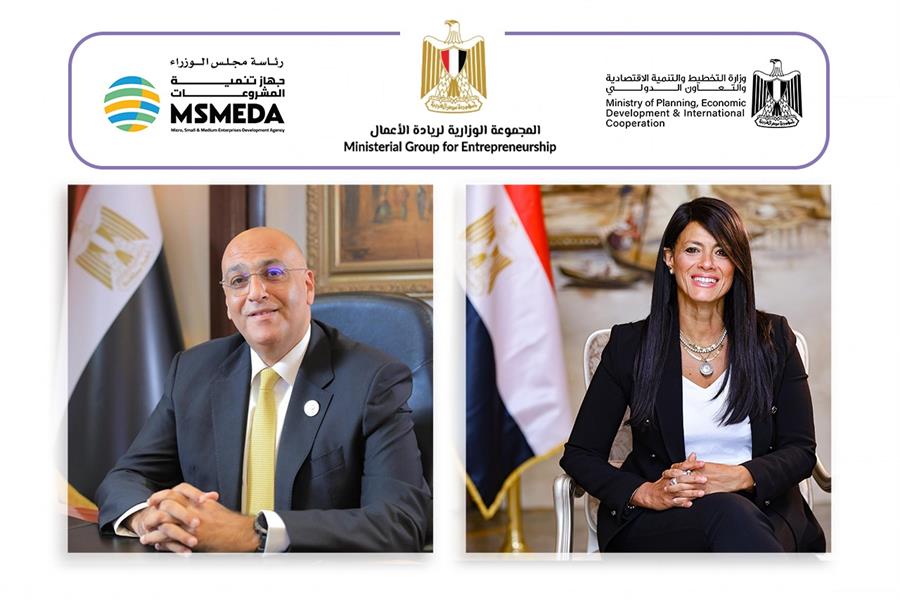
H.E. Dr. Rania Al-Mashat, Minister of Planning, Economic
Development and International Cooperation, delivered the opening remarks at the
launch of the 50th edition of the Global Food Policy Report 2025, issued by the
International Food Policy Research Institute (IFPRI). The event also marked the
10th anniversary of IFPRI’s Cairo office and was held under the patronage of the
Ministry of Planning, Economic Development and International Cooperation, in
collaboration with the International Initiative for Impact Evaluation (3ie).
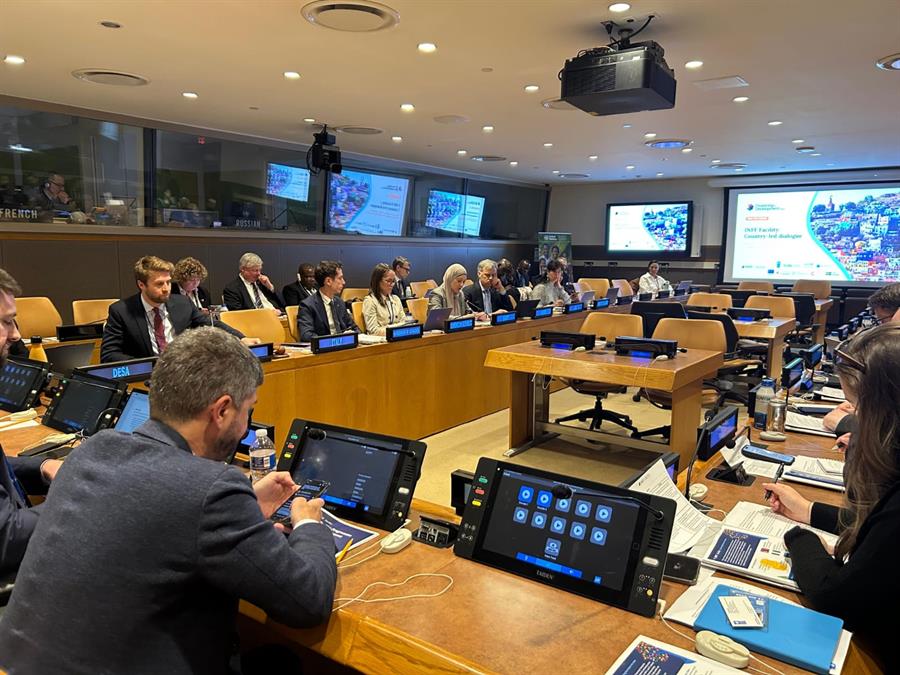
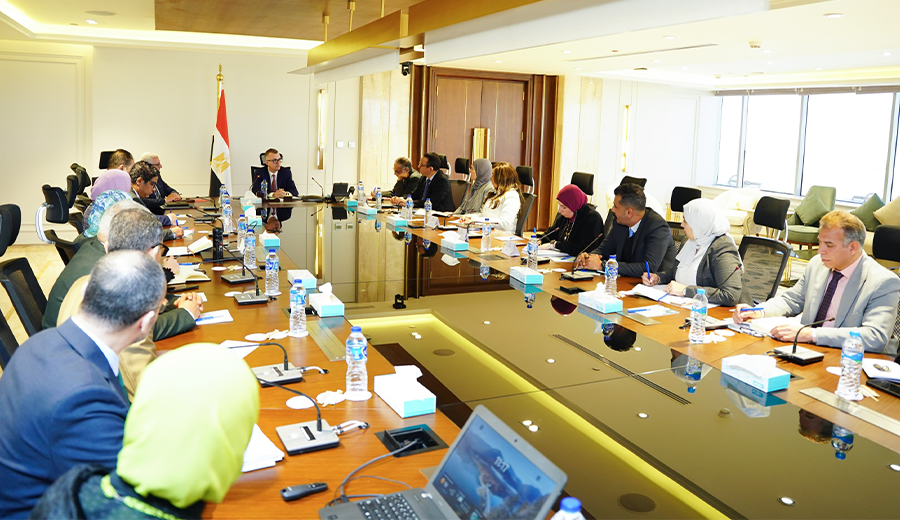
The ceremony was attended by Dr. Stephen Were Omamo, IFPRI
Africa Director; Dr. Sikandra Kurdi, IFPRI Egypt Program Leader;
representatives from the National Planning Institute, the Central Agency for
Public Mobilization and Statistics (CAPMAS), the Ministry of Social Solidarity;
several international organizations; and regional partners.
Delivering her remarks via video message, H.E. Dr. Rania
Al-Mashat stated that while the world has made notable progress in reducing
global hunger, recent data reveals the fragility of these gains. Hunger
declined from 8.5% of the global population in 2023 to 8.2% in 2024. Yet
achieving Sustainable Development Goal 2 will require sustained momentum and
intensified efforts. Millions of people still suffer from malnutrition, and
many families remain unable to afford a healthy diet despite improvements in
global food prices.
In this context, she affirmed that Egypt continues to
advance food security efforts through multiple pillars and in an integrated
manner across state institutions. These efforts support the expansion of
agricultural land, improve living standards in rural areas, and promote
sustainable food and agricultural systems.
She added that food security is closely intertwined with
climate action. Through the National Climate Change Strategy 2050 and
initiatives such as the NWFE program, Egypt has placed food and agricultural
systems at the core of its climate agenda. She noted that international
partnerships have been instrumental in driving progress. This year, Egypt and
its European partners launched the Food Resilience Enhancement Project to
strengthen grain storage capacity and reinforce the strategic reserve.
H.E. Al-Mashat also highlighted Egypt’s ongoing work to
enhance resilience across value chains, including supporting smallholder
farmers and rural enterprises, scaling up climate-smart agricultural practices,
and improving storage, logistics, and trade systems. She emphasized that over
the past decade, IFPRI’s Cairo office has been a trusted partner, providing
research and analysis that have significantly enriched national policy
dialogues.
H.E. Al-Mashat expressed her appreciation for the Global
Food Policy Report 2025, noting that it offers a clear and comprehensive vision
on food systems, climate resilience, agricultural transformation, and the
socioeconomic dynamics shaping global development. She stressed that
evidence-based analysis across food system sectors — covering climate impacts,
social protection, gender, governance, and innovation — remains an essential
resource for governments and development partners striving to design effective,
inclusive, and forward-looking policies.
She concluded by affirming that the insights contained in
this year’s report will continue to guide policymakers in strengthening
resilience, improving resource allocation, and advancing more inclusive and
sustainable development pathways. H.E. Al-Mashat extended her sincere
congratulations to IFPRI on its golden jubilee and to the Cairo office on a
decade of meaningful impact.
-

-

-

-
 copied successfully